What makes wall art Vastu-compliant?
Vastu-compliant wall art combines a meaningful symbol, an appropriate material, and a considered placement. Vastu Shastra is a traditional Indian approach to architecture; interpretations vary by practitioner, so treat these directions as a practical starting point rather than a substitute for personalised advice.

Sacred geometry includes the Shree Yantra, chakra systems, Om, Ganesh, and radial mandalas. A landscape, abstract print, or ordinary decorative object can still be beautiful, but it does not carry the same specific symbolic reading. Material integrity matters because wood, copper, and clay are natural materials commonly preferred in traditional settings.
Three checks keep the choice coherent: identify what the symbol represents, choose a wall that supports the room's purpose, and leave enough clear space for the artwork to be seen without competing objects.
Which Vastu direction suits each wall art symbol?
Popular vastu practice often associates east with the rising sun, north-east with prayer or contemplation, north with work and movement, and west with creative or natural motifs. These are interpretive conventions rather than guaranteed outcomes, and they are not applied identically by every lineage or practitioner.
| Area commonly suggested | Decor theme | Practical check |
|---|---|---|
| East | Sacred geometry or a morning practice focal point | Confirm whether advice means the east wall or art facing east |
| North-east | Prayer or meditation imagery | Keep the wall dry, quiet, and free of visual clutter |
| North | Study, travel, or work themes | Check glare, furniture scale, and sight lines |
| West | Floral, craft, or nature-led art | Use the room purpose and household practice as the final test |
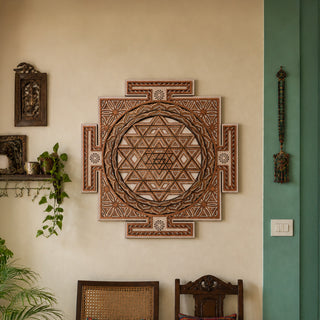
- East: prosperity symbols such as Shree Yantra, Kuber Yantra, or Lakshmi iconography. The Shree Yantra Sacred Wall Art suits an east-facing pooja-room wall.
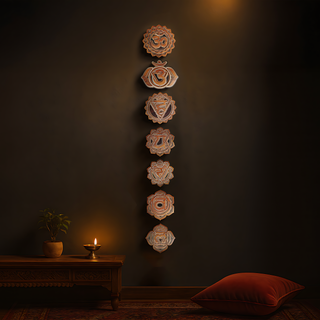
- North-east: meditation and spiritual-growth symbols such as the 7 Chakras Spiritual Wall Art, Om, or Ganesh.
- North: career and opportunity themes, including a world map, study artwork, or a balanced mandala.
- West: creativity, floral patterns, and natural motifs such as the Bloom Whirl Flower Art.
- Use caution: avoid bathroom-adjacent walls, damp corners, under-stair spaces, and sacred geometry directly behind a bed.
Where should wall art go in a pooja room?
In a pooja room, keep the primary sacred symbol visible, above floor level, and separate from damp surfaces or visual clutter. An east wall means the artwork faces west, while artwork facing east hangs on the west wall. Clarify which convention your household practice uses before installation.
The Shree Yantra represents a complex geometric form associated with Tripura Sundari and is traditionally treated with care. If the room cannot support an east placement, north-east is a reasonable second choice; ask a qualified Vastu practitioner when the home has unusual entrances, beams, or multiple competing directions.
For chakra art, mount Mūlādhāra lower and Sahasrāra higher so the visual sequence reads from base to crown. A meditation cushion or low console should not block the lower layers.
How should you place Vastu wall art in a living room?
A living-room piece should be visible from the main seating position and proportionate to the wall. A large mandala or world map can anchor a south or north wall, while a smaller floral piece can sit above a console or in an entry sight line.
Keep one main focal piece rather than mixing several sacred symbols on one wall. For a new-home or Griha Pravesh gift, the Griha Pravesh gifting guide and a carefully scaled wooden mandala create a warmer welcome than a crowded arrangement.
Use the wall's function as a final filter: a study can support a world map, a reading corner can support a calm mandala, and a family living room can use a welcoming floral motif.
Which wall art is suitable for a bedroom?
Choose quiet, natural, or floral motifs for a bedroom and avoid placing intense sacred geometry behind the head of the bed. A feather sculpture, soft mandala, or restrained botanical piece on the opposite wall is easier to live with than a visually busy symbol above the pillow.
Avoid aggressive water imagery, storm scenes, and artwork exposed to a damp bathroom wall. Whatever the tradition, safe installation, low glare, and a clear walking path matter more than forcing a direction that makes the room uncomfortable.
Why do materials matter in Vastu wall art?
Natural materials give a Vastu-inspired piece a tactile, durable presence. Sutrayan describes its work as laser-cut FSC-certified engineered pine, assembled in 5 to 12 layers, and finished with water-based non-toxic stains. That construction gives a symbol physical depth while keeping the surface suitable for normal indoor use.
Look for clean cuts, stable layers, a sealed finish, secure hanging hardware, and an honest care policy. A printed image can carry the same visual symbol, but it does not offer the same material experience as a hand-finished wooden wall sculpture. Read the 3D wood versus canvas comparison before buying.
How should you choose wall art size and height?
For a sofa or console, choose art about two-thirds to three-quarters of the furniture width and leave a comfortable visual gap above it. Centre the piece at seated eye level in a living room, and check that door swings, fans, and furniture will not strike the projecting layers.
- Measure the wall and furniture before ordering, then mark the outer dimensions with paper tape.
- Use a wall anchor rated above the artwork's weight; do not rely on a small nail for a heavy multi-layered piece.
- Leave airflow behind the work in humid rooms and keep it away from direct spray.
For a broader maintenance checklist, see the wooden wall art humidity care guide.
What do people ask about Vastu wall art?
Can I hang a Shree Yantra on a wall that is not east-facing?
The east-facing wall is traditionally preferred, especially in a pooja room. If the layout makes east impossible, north-east is commonly considered the next choice. Avoid treating a direction as a guarantee of outcomes; symbol, room use, respectful placement, and a secure installation all matter.
Does a mandala have to follow a specific design for Vastu?
Sacred-geometry mandalas such as Shree Yantra have more specific traditional associations. Floral and decorative mandalas are more flexible and can support a calm focal wall without claiming the same ritual meaning. Read the mandala layers and symbolism guide to distinguish the two.
Should I avoid wall art in the bedroom?
No. Prefer quiet floral, natural, or abstract motifs, keep sacred geometry away from the headboard, and avoid aggressive water imagery. The best bedroom piece is one that feels restful, remains stable in the room's humidity, and is mounted safely.
Is a 3D wooden world map Vastu-appropriate?
It can suit a study or office on a north wall in common Vastu interpretations because the map suggests opportunity and movement. Confirm the size and sight line first; the 3D wooden world map styling guide covers backdrop, scale, and lighting.
What should you read next about wooden wall art?
Compare the materials and longevity of 3D wood versus canvas, learn how handcrafted wall art works for corporate gifting, or explore how to style a 3D wooden world map.
When you are ready to browse, explore handcrafted wooden wall art in the Sutrayan shop.
For personalised Vastu guidance, consult a qualified practitioner; this guide covers common cases only.
Which sources support this guide?
These references support the historical, material, conservation, or regulatory context used above. Spiritual and placement guidance is identified as tradition or interpretation, and decorative objects are not presented as medical, financial, or guaranteed remedies.
- IGNCA publications on Vaastu and Indian architectural texts
- Theory and Practice of Temple Architecture in Medieval India, IGNCA
- Architecture of India course reading, Dr. B. R. Ambedkar University Delhi
Editorial review completed 30 August 2026. Product prices and availability can change; check the linked product page before ordering.