Why does 3D depth change how wall art looks?
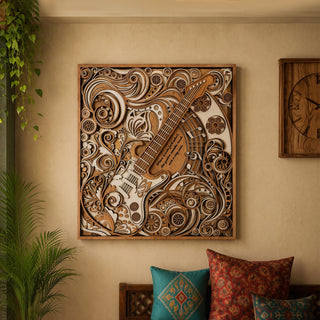
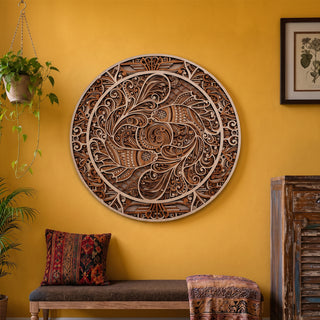
Physical depth changes how a wall piece responds to light, distance, and movement. Sutrayan's layered mandalas typically stack 5 to 12 pieces of 3 to 6 mm engineered wood, creating shadows through the cut-outs; a canvas print remains visually flat even when the same artwork is reproduced at a larger size.

That shadow play is not a camera trick. Morning or side light reaches each layer at a different angle, so the artwork changes subtly as the viewer moves. A canvas can deliver sharp colour and a familiar image, while 3D wood adds relief, texture, and a gallery-like presence.
For a buyer, inspect the side profile, layer alignment, edge finish, and how the piece looks under both diffuse and directional light. Those details reveal more than a front-facing product thumbnail.
How do wood and canvas perform in Indian homes?
Handcrafted wooden wall art uses a rigid substrate with a sealed finish; canvas uses woven fabric stretched over a frame and printed with pigment or dye inks. Sutrayan describes its pieces as FSC-certified engineered pine and birch MDF, finished with water-based stains and satin polyurethane rated for 85% humidity.
That sealed, layered construction is better suited to normal indoor monsoon conditions than an unsealed or poorly stretched surface, but no artwork should touch standing water or a damp wall. Canvas is lighter and easier to roll or replace, yet prolonged humidity can cause sagging, frame shadowing, or colour shift depending on the fabric, ink, and placement.
Whichever material you choose, keep it away from direct sun, bathroom steam, kitchen oil, and AC vents. The Indian humidity care guide explains the placement routine for wooden pieces.
| Decision factor | 3D wooden wall art | Canvas print |
|---|---|---|
| Visual effect | Physical relief and changing shadows | Flat image and printed colour |
| Weight | Heavier, so the wall and anchor matter | Lighter and easier to reposition |
| Best use | Long-term focal wall or substantial gift | Rental, temporary decor, or frequent refresh |
| Care | Dry dusting and protection from damp | Dusting and protection from moisture and sun |
Which has better long-term value: wood or canvas?
Canvas usually wins on upfront price, while a well-made wooden piece may offer better value for a long-term focal wall. Compare the expected years of use, the construction, and the installation needs rather than relying only on the checkout price.
Canvas is often the better calculation for a rental, a temporary first-home setup, or a child's room that will change quickly. Wood is the stronger fit for a long-stay home, a meaningful wedding gift, or a boardroom where texture and presence communicate quality.
For a safe comparison, ask for material specifications, finish details, hanging hardware, care instructions, warranty terms, and the actual installed dimensions. A low price is not a like-for-like comparison if the frame, finish, or installation is missing.
Why is 3D wooden wall art stronger for premium gifting?
A premium gift has to survive the unboxing moment and remain useful after it. The weight, relief, and visible hand-finishing of a wooden wall piece make the object feel intentional; a canvas print is lighter, more familiar, and easier to replace but can feel less distinctive in an executive or family setting.
For weddings, Griha Pravesh, and corporate gifting, choose a motif that respects the recipient's space. A world map works for an executive office, a mandala for a living room, and a sacred symbol only when you understand the recipient's cultural context. See the corporate gifting ideas guide for a recipient-by-recipient framework.
How durable is 3D wooden wall art in Indian climates?
Indoor durability depends on the substrate, seal, wall, and exposure. A sealed layered piece can handle normal seasonal changes, but direct rain, plumbing leaks, and sustained sun remain risks. Check the current warranty on the product page before ordering; warranty coverage is not a substitute for correct placement.
Use a weight-rated anchor, leave airflow behind the piece, and wipe spills promptly. Avoid hanging heavy layered art where vibration, children, or furniture can strike the projecting details. The world map styling guide includes scale and mounting checks for statement pieces.
When is a canvas print the better choice?
Canvas is the sensible choice when you need a large image at the lowest initial cost, want to rotate art often, live in a rental, or need a lightweight piece for a temporary installation. It is also practical where a flat surface is easier to clean or store.
3D wood is the better choice when the wall is a long-term focal point, the gift needs lasting presence, or you want light and shadow to be part of the experience. Neither material is universally superior; the right answer follows the room, budget, climate, and time horizon.
What should you inspect before buying a 3D wooden wall piece?
Start with the construction details: number and thickness of layers, substrate, stain or paint, sealer, finished dimensions, weight, hanging method, and warranty. Ask whether the piece is assembled and finished by hand, how it is packed, and whether replacement or repair support exists.
- Depth: a side view should show aligned layers rather than a single flat board.
- Finish: cut edges should be clean, with no loose fibres or sticky residue in the tracery.
- Installation: the package should state weight and recommend a suitable wall anchor.
- Care: the seller should explain cleaning and humidity limits clearly.
Once those facts are clear, browse the Sutrayan shop for handcrafted wooden wall art sized for real Indian rooms.
What do buyers ask about wood versus canvas?
How long does 3D wooden wall art last compared with canvas?
A well-made, sealed wooden piece can serve for 10 to 20 years with sensible indoor care. Canvas lifespan varies by fabric, ink, light, and humidity; colour fidelity often declines sooner in harsh exposure. Treat both as interior objects, not outdoor signage.
Is 3D wooden wall art harder to install?
Usually not. Pre-fitted hardware and a hanging guide make installation straightforward, but the anchor must match the artwork's weight and the wall type. A second person is useful for a large map or a multi-layered piece.
Does wooden wall art work in humid Indian cities?
Yes, when the piece is sealed and kept indoors away from direct spray, leaks, and damp walls. Keep airflow behind it and follow the seller's humidity and care instructions. Never assume a finish protects against standing water.
Is the price difference between wood and canvas justified?
For a long-term focal wall or meaningful gift, many buyers value wood's depth, construction, and longevity enough to justify the higher price. For temporary or frequently changing decor, canvas is often the more rational choice.
What should you read next before choosing wall art?
See the care guide for Indian humidity, compare world map scale and lighting, or use the corporate gifting selection guide when the artwork is a present.
Browse premium handcrafted wooden wall art in the Sutrayan shop after you have measured the wall.
Which sources support this guide?
These references support the historical, material, conservation, or regulatory context used above. Spiritual and placement guidance is identified as tradition or interpretation, and decorative objects are not presented as medical, financial, or guaranteed remedies.
- Basic care for wooden objects, Canadian Conservation Institute
- Care of furniture finishes, Canadian Conservation Institute
- Composite wood product facts for consumers, US EPA
Editorial review completed 30 August 2026. Product prices and availability can change; check the linked product page before ordering.