The best direction for a pooja room depends on the home, the available light, and the practice of the family. In many Indian Vastu traditions, the north-east is preferred, with east and north also commonly considered suitable. Yet a calm, clean and usable prayer space is more important than forcing a compass rule into a difficult corner. If the ideal direction is not practical, choose a respectful place where daily worship can happen without clutter or disturbance.
This guide treats Vastu as a traditional architectural framework, not as a promise of luck, health or prosperity. Regional customs, family lineages and the advice of a family priest or architect may differ. Use the directions below as thoughtful design guidance and adapt them to the way your household actually prays.
Featured artwork: A Night Scene of Shiva Puja (recto), Unknown artist, Mughal India, Lucknow, c. 1760-1770. CC0 1.0; Cleveland Museum of Art Open Access.
Pooja room direction at a glance
| Question | Practical answer |
|---|---|
| Which direction is usually preferred? | North-east is frequently recommended in contemporary Vastu guidance. East and north are common alternatives. |
| Which way should a person face while praying? | Many households prefer to face east or north, but the shrine layout and family custom should lead. |
| What if the north-east is unavailable? | Choose a clean, peaceful east or north zone, or the best undisturbed area available. Avoid creating an unsafe or unusable layout. |
| Can a pooja space be in a flat? | Yes. A wall-mounted mandir, cabinet shrine or dedicated shelf can create a defined sacred area. |
| Is exact compass alignment essential? | Not for every household. Traditional texts and living practices vary. Consistent use, cleanliness and reverence matter in everyday life. |
Why north-east is often suggested
Vastu Shastra is a broad body of Indian architectural thought rather than one short list of universal household rules. Historical texts discuss site planning, proportion, orientation, building types and ritual life. Later regional practice has added its own readings. In widely circulated domestic Vastu guidance, the north-east is associated with openness, early daylight and a quiet part of the plan. This is why it is often suggested for prayer or contemplation.
That preference should be understood in context. A north-east corner beside a noisy entrance, damp wall or crowded utility area may be less suitable than a peaceful east-facing niche elsewhere. Traditional planning was always tied to the actual site. Modern apartments add plumbing shafts, shared walls, limited daylight and fixed room layouts. A good decision considers both the symbolic direction and the lived conditions.
How to choose the right place in your home
1. Begin with quiet and daily access
The space should be easy to approach and simple to keep clean. If prayer is part of the morning routine, choose a place that does not require moving furniture every day. A small dedicated niche that is used regularly can feel more settled than a larger room that doubles as storage.
2. Check natural and artificial light
Soft daylight helps a prayer corner feel open, but direct harsh sun can fade artwork, fabrics and photographs. Add a warm, even light for early mornings and evenings. Keep electrical wires concealed and ensure lamps are placed on a stable, heat-safe surface.
3. Map the direction accurately
Stand near the centre of the room and use a reliable compass away from large metal objects and appliances. Take more than one reading. Phone compasses can drift indoors, so compare the reading at different points. The purpose is to understand the plan, not to chase a degree-perfect alignment at the cost of function.
4. Respect the household's tradition
Some families have an inherited order for arranging deities, sacred books, lamps or offerings. Others maintain a simple contemplative shelf. Ask the people who use the space before changing its orientation. There is no single arrangement that represents every Hindu tradition.
Which way should the mandir and deities face?
Advice on this point is often confusing because people use “facing” in two different ways. One person may mean the direction the worshipper faces; another may mean the direction the image faces. A practical approach is to decide first where the person will sit or stand, then arrange the shrine so worship is comfortable and the images remain clearly visible.
Many households arrange the space so the worshipper faces east or north. This can mean the shrine is set against the west or south side of the prayer area. Customs differ, however, and some images have established placement traditions. If your family follows a specific sampradaya or temple practice, follow that guidance rather than a generic diagram found online.
Avoid placing sacred images directly on the floor. Use a stable raised platform, shelf or mandir. Do not crowd many images into a narrow cabinet. Give each object enough space to be cleaned without knocking or stacking it.
Pooja room placement in apartments and small homes
A separate room is not necessary. The aim is to create a defined boundary between ordinary storage and sacred use. These options work well in compact homes:
- A wall-mounted mandir: useful when floor area is limited. Confirm the wall and fixings can carry the weight.
- A ventilated cabinet shrine: doors allow visual calm when the area is not in use. Never close the cabinet around a burning diya or incense.
- A dedicated shelf in a quiet room: choose one that is not used for keys, bills or unrelated objects.
- A screened corner: a light partition can give privacy without making the space feel cramped.
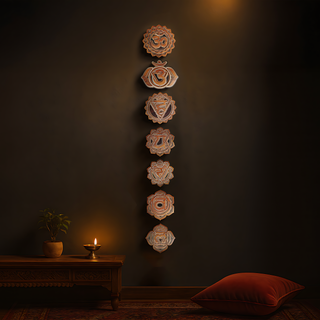
- A meditation and prayer wall: a single sacred artwork, low seat and lamp can form a restrained setting. Sutrayan's sacred wall icons offer examples of this quieter approach.
In a rented flat, reversible choices are sensible. Use secure picture hooks approved for the wall, a freestanding console or a compact mandir that can move with you. The related guide to pooja room wall decor ideas covers scale, lighting and composition without requiring structural changes.
Places that need extra thought
Some modern Vastu lists describe absolute prohibitions, but real homes are rarely so simple. Use the following concerns as planning checks:
- Beside a bathroom: if this is the only workable area, keep the shrine dry, ventilated and visually separate. Do not place it where plumbing leaks or moisture are likely.
- Inside a bedroom: a dedicated cabinet or screened niche can preserve privacy and order. Family custom may have a stronger view, so discuss it.
- Under stairs: low headroom and storage clutter can make worship uncomfortable. Choose another location when possible.
- In the kitchen: some households maintain a traditional shrine here. Keep it away from heat, grease and the sink, and follow fire safety.
- Near the entrance: it can work if the area is protected from shoe storage, traffic and accidental contact.
Design details that support a peaceful pooja space
Keep the background visually calm
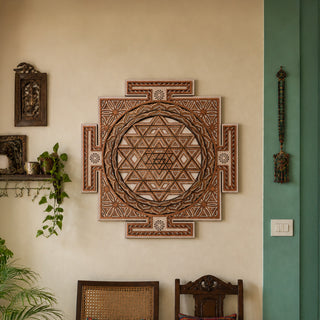
A shrine already contains several meaningful forms. Choose one clear focal point rather than adding competing motifs to every surface. Pale wood, stone tones, warm white and muted natural colours usually let brass, flowers and sacred images remain prominent. If you use a yantra, understand its place in your practice first. Our guide to yantra meaning and types explains the difference between a sacred diagram, a decorative motif and a three-dimensional form.
Plan storage before decoration
Provide a drawer or box for wicks, matches, incense, cloths and small vessels. Store oils upright and away from heat. A clear surface is easier to clean and reduces fire risk. Sacred books should have a dry, respectful shelf rather than being squeezed below loose supplies.
Choose artwork at the correct scale
Measure the available wall after placing the mandir. A small room generally benefits from one proportionate piece with breathing room. Before buying, mark the dimensions with paper tape and view them from the prayer seat. The 3D wood versus canvas guide can help you compare depth, care and visual weight.
Use fire and smoke safely
Place a diya on a non-flammable tray with clear space above it. Keep it away from curtains, paper, dried flowers and carved wood. Ensure incense smoke can disperse, especially around children, older adults and anyone sensitive to smoke. Never leave a flame unattended.

A simple setup checklist
- Identify two or three quiet locations before choosing by direction alone.
- Check compass readings, daylight, ventilation, moisture and walking clearance.
- Decide which way the worshipper will face and test the seated or standing position.
- Use a stable raised surface and secure wall fixings.
- Create enclosed storage for daily items.
- Leave safe clearance around lamps and incense.
- Choose one main visual focus and keep the background restrained.
- Review the arrangement with family members who use it.
Frequently asked questions
Can the pooja room face south?
Many current Vastu guides prefer north-east, east or north, but a south-facing arrangement is not automatically disrespectful. The answer depends on what “face” means, the room plan and the family's practice. If there is no practical alternative, create a clean, stable and undisturbed shrine rather than abandoning the prayer space.
Can a mandir be placed in the living room?
Yes. A defined niche, cabinet or quiet wall can work well. Keep it away from the television's immediate visual field, heavy traffic and casual storage. Doors or a light screen can provide separation when needed.
Should the pooja room door have two shutters?
Double shutters are an aesthetic and functional choice, not a requirement for every home. Choose doors that open safely, allow ventilation and do not block a passage. In a small apartment, a single door or open niche may be more practical.
What colours are suitable?
Warm whites, light wood, muted yellow and soft natural tones are common because they reflect light and keep the setting calm. There is no need to repaint a whole room if the existing colour feels clean and settled.
A pooja room works best when direction, dignity and daily life support one another. Start with a space that can be cared for consistently. Then use traditional orientation as a guide, not a reason to make the room unsafe, cramped or anxious.
Sources and further reading
- Indira Gandhi National Centre for the Arts: Theory and Practice of Temple Architecture in Medieval India
- IGNCA: Vastu Shastra course overview
- Journal of Cultural Geography: Vastu Vidya and traditional settlement planning
- The Metropolitan Museum of Art: Hinduism and Hindu Art
Written by Sutrayan Studio, a design team exploring Indian art, material craft and the stories carried into contemporary homes.