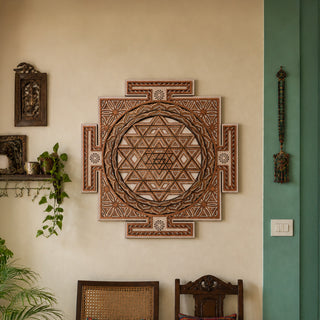
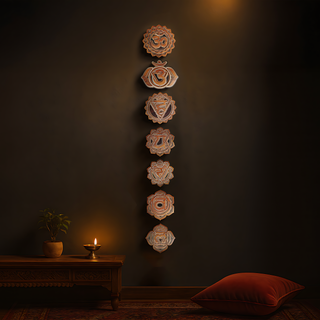
The best pooja room wall decor is calm, proportionate, easy to maintain, and meaningful to your household. Begin with one focal symbol, such as Shree Yantra or seven chakras, then add warm light and only a few supporting elements. Keep sacred images above floor level, away from damp walls, footwear, and visual clutter.

At Sutrayan Studio, we design for both compact apartment niches and dedicated prayer rooms. Our layered wall art is cut from premium engineered pine (MDF), assembled and hand-finished in our Kanpur workshop, giving a small sacred space depth without requiring a crowded arrangement of objects.
How do you decorate a pooja room wall?
Start with the practice, not the shopping list. Note where you sit or stand, which wall you face, what objects are already essential, and where lamps or incense are used. The focal wall should support prayer without making cleaning or access difficult.
Choose one primary element: a sacred symbol, a framed deity image, a carved panel, or a small temple backdrop. Let secondary objects remain smaller. Repetition can be beautiful, but in a compact niche it quickly becomes clutter. A clear centre gives the eye and the ritual a place to settle.
Our complete pooja room wall decor collection and guide is the best starting point for scale, product options, and room-specific inspiration.
What pooja room wall decor suits different sizes and styles?
Match the decor to the usable wall, not the overall room label. A slim apartment niche may need a single 12-inch focal piece, while a dedicated room can hold a larger symbol with balanced lamps or shelves. Traditional and modern spaces can use the same sacred geometry with different surrounding materials.
| Space | Focal wall idea | Supporting elements | What to avoid |
|---|---|---|---|
| Compact wall niche | One small Shree Yantra or framed sacred image | Single warm light, narrow ledge, concealed storage | Multiple large frames and exposed wires |
| Apartment cabinet pooja | Centred symbol on the back panel | Door bells, a washable altar surface, small drawers | Artwork too thick for closing doors |
| Dedicated small room | Shree Yantra or seven-chakra wall hanging at seated sightline | Symmetrical lamps, calm wall colour, floor cushion | Furniture that blocks the lower part of the artwork |
| Traditional pooja room | Sacred geometry coordinated with the household’s deity arrangement | Wood, brass, textile, and restrained floral decoration | Mixing symbols without understanding their context |
| Modern minimal pooja corner | One layered wooden icon on a plain wall | Floating shelf, warm concealed light, closed storage | Cold glare and decorative objects with no relationship |
| Large family prayer room | Generous central composition with clear hierarchy | Paired lamps, seating, organised book storage | Filling every wall simply because space is available |
Which wall art is best for a pooja room?
The best artwork is one your household understands and respects. Shree Yantra suits families that use Sri Chakra symbolism and want a precise geometric centre. A seven-chakra composition suits a room shared with meditation or yoga. A mandala can provide radial calm, though its ritual meaning depends on the specific tradition and design.
The Shree Yantra Sacred Wall Art is available in 12, 17, and 22-inch square sizes. Its seven-layer geometry can fit a niche or grow into a dedicated-room focal point without introducing an invented deity image. Check the product page for the current price and availability.
The 7 Chakras Spiritual Wall Art works best when the pooja space also supports meditation. Keep its vertical sequence unobstructed, explain the imagery to children or guests who may only know the modern colour system, and use the product page for current pricing.
Which direction is best for pooja room wall decor?
East and north-east are common choices for sacred imagery and prayer spaces in vastu-informed Indian homes. East connects with morning light, while north-east is often reserved for contemplative use. The actual altar orientation and your family practice may be more specific, so follow the tradition you trust.
Direction should not force art onto a damp, unstable, or disrespectful wall. Avoid bathroom-adjacent seepage, direct contact with a kitchen splash zone, or a position behind an opening door. Our Vastu wall art direction guide compares rooms, symbols, and practical placement.
How high should wall decor be in a pooja room?
Set the height from the worship position. If the family sits on the floor, place the centre lower than conventional gallery height so the gaze remains relaxed. If the altar is used while standing, position the main symbol comfortably above it without leaving an exaggerated empty gap.
Mock the outer dimensions with paper tape. Sit, stand, light the normal lamp, and check sightlines from the doorway. Ensure garlands will not cover the central geometry and cabinet shutters will not strike the edges.
Sacred images are generally kept above floor level and treated with care. Exact ritual height varies, so let household custom guide the final adjustment.
How can you light a pooja room wall safely?
Use warm, indirect electric light to reveal texture without creating glare. A small concealed strip above or beside the focal art can make layered shadows visible. Test whether the fitting produces heat near the artwork and follow the light manufacturer’s clearances.
Keep diyas, candles, and incense at a safe distance from premium engineered pine (MDF), textiles, flowers, and electrical wires. Flame belongs on a stable, non-combustible surface where it can be attended. Do not mount wall art directly above a soot path or where oil splashes can reach it.
What colours make a pooja room feel calm?
Warm off-white, soft stone, muted clay, pale yellow, and natural wood tones give sacred objects a quiet background. Rich reds, saffron, green, or blue can appear in textiles and symbolic details rather than covering every surface. The goal is not a universal vastu palette; it is legibility, warmth, and ease of maintenance.
In a small niche, using the wall and cabinet in related tones can make the space feel larger. In a dedicated room, a slightly deeper focal wall may help pale wood or brass stand out. View samples under the lamp you will actually use because warm LEDs alter colour.
How do you decorate a small pooja room without clutter?
Use vertical space carefully and hide supplies. A shallow closed drawer can hold matchboxes, cotton wicks, and spare incense. A single shelf may hold daily objects, while seasonal decorations can be stored elsewhere. Avoid treating the wall as overflow storage.
- Choose one focal artwork rather than several competing pieces.
- Keep the centre visible from the normal prayer position.
- Use closed storage for practical supplies.
- Limit the palette to the focal art plus two supporting tones.
- Leave access for dusting and safe lamp use.
A small room benefits from depth that does not consume floor area. Layered wall art can cast sculptural shadows while leaving the ledge free for objects used in worship.
What natural materials work in a pooja room?
Wood-based surfaces, brass, stone, cotton, and clay can create a warm tactile setting. Each needs appropriate care. Stone is useful under oil lamps, cotton textiles should stay clear of flames, brass needs periodic cleaning, and wood-based art must be protected from direct water and soot.
Our layered pieces use premium engineered pine (MDF), not solid timber. We value that clarity: the consistent substrate supports fine laser-cut geometry, and the hand finishing gives the assembled layers their final surface. Explore the Sacred Wall Icons collection to compare symbols and proportions.
How do you decorate a pooja room for festivals?
Build the everyday room first, then add temporary festival layers. Fresh flowers, a toran, rangoli near the threshold, and warm lights can transform the space without permanently crowding the focal wall. Keep adhesive away from the art finish and remove floral moisture before it reaches wood-based surfaces.
For Diwali, test electrical strings, keep wire runs clear of the floor, and give every flame a stable attended location. After the festival, return to the calm base arrangement rather than leaving damaged tape and dried garlands around the artwork.
How should you care for layered wooden pooja room decor?
Dust with a soft, dry cloth or brush. Do not use water, spray cleaners, or oil on the finished surface. If incense leaves residue, move the holder or improve ventilation rather than rubbing the artwork aggressively.
Inspect the wall during the monsoon and address seepage at its source. When lifting the piece, support the outer structure and avoid delicate cut-outs. Made-to-order wall art deserves the same calm, regular care as the room itself.
Written by Sutrayan Studio. We make layered wooden wall decor to order in our Kanpur workshop.
What do people ask about pooja room wall decor?
What should I put on a pooja room wall?
Choose one meaningful focal symbol or deity image, then support it with warm light and restrained materials. The exact choice should follow your household practice.
Can I use 7 chakra art in a pooja room?
Yes, especially when the room also serves meditation or yoga. Keep the full sequence visible and use it only if chakra imagery fits your spiritual context.
Is MDF suitable for pooja room decor?
Premium engineered pine (MDF) is suitable for dry indoor walls. Keep it away from direct flame, water, dampness, soot, and oil splashes.
How can I make a small pooja corner look elegant?
Use one proportionate focal piece, concealed storage, a limited palette, and warm indirect light. Empty space is part of the design.
Which sources support this guide?
These references support the historical, material, conservation, or regulatory context used above. Spiritual and placement guidance is identified as tradition or interpretation, and decorative objects are not presented as medical, financial, or guaranteed remedies.
- IGNCA publications on Vaastu and Indian architectural texts
- Theory and Practice of Temple Architecture in Medieval India, IGNCA
- Basic care for wooden objects, Canadian Conservation Institute
Editorial review completed 30 August 2026. Product prices and availability can change; check the linked product page before ordering.